
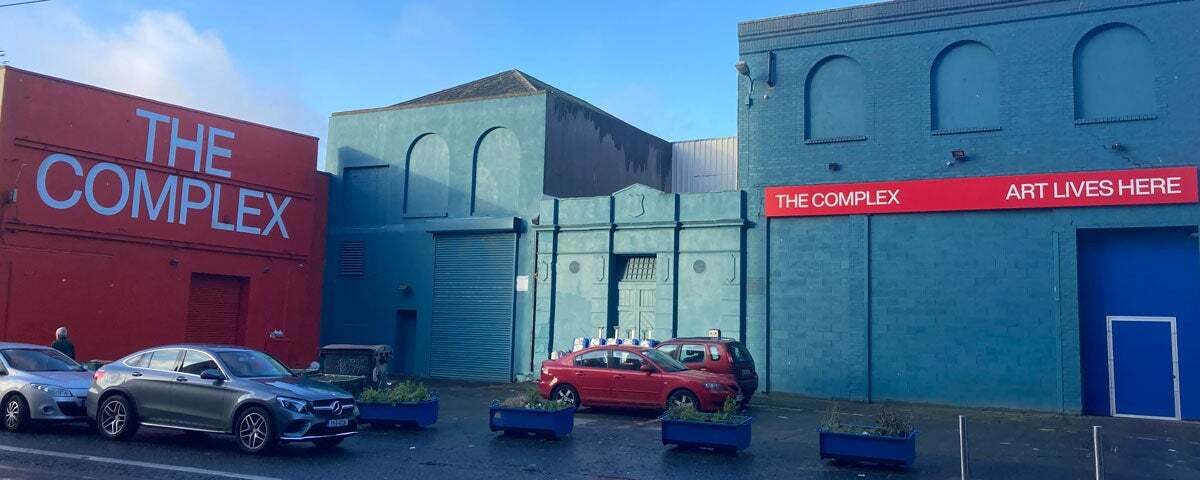
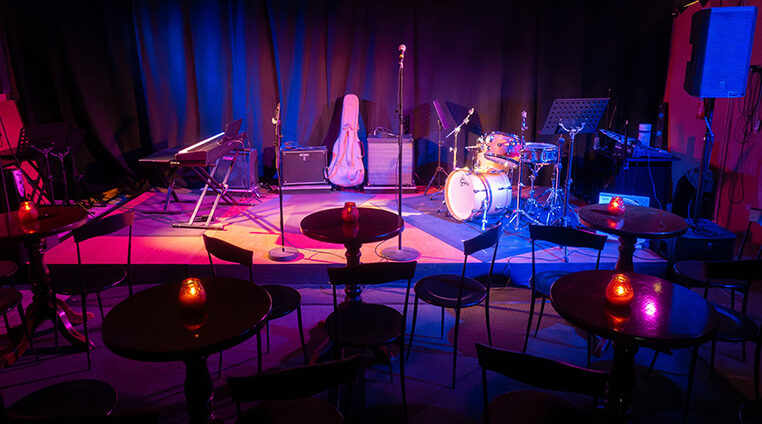
On a damp evening in Smithfield, jazz hums from behind an old industrial cold-room door — an unlikely portal into one of Dublin’s most intimate creative spaces. Inside, The Cooler’s 60 seats, warm lights and close-up stage have hosted rehearsals, workshops, album launches and countless nights of improvised music. One concert reviewer described it as “a beautiful, intimate space behind a vast refrigerator door; it feels like finding a secret.”
But that secret will soon fall silent.
The Complex — the building that houses The Cooler, along with artist studios, a gallery and a larger performance space — has been issued an eviction notice effective 14 January 2026. Unless something changes, the jazz club and its surrounding creative community will be removed, with no alternative space offered and no clear path for relocation.
More Than a Venue — A Creative Lifeline
Founded by Improvised Music Company (IMC), The Cooler wasn’t designed as just another small gig room. It began life in 2023 when IMC transformed a former banana-ripening unit into a dedicated, affordable home for jazz and improvised music — something Dublin had lacked for decades.
IMC’s vision for the space included:
- a community-driven rehearsal room
- a development and workshop hub
- an intimate, purpose-built performance venue
- equipment and infrastructure musicians could never afford on their own
This was cultural infrastructure in its purest form: modest, highly functional, and built for experimentation rather than profit.
Across the wider Complex, the ecosystem was even broader: more than a dozen artist studios, a gallery, a large performance hall, and community spaces for theatre, visual art, film, and interdisciplinary projects. As the organisation’s leadership put it, “we’re probably the only place that does it all.”
For musicians, visual artists, producers and performers, the loss isn’t abstract. It’s immediate and personal.
“It’s not just losing a venue, a gallery, artist studios, a workplace, but it’s also this community of people that would be scattered. I think it would be a huge loss to Dublin and to Ireland.”
Creative communities rely on proximity — the chance encounters, the informal collaborations, the steady mingling of disciplines. When a space like this closes, the network it supports rarely survives intact.
Part of a Larger Pattern of Loss
The closure of The Cooler does not happen in isolation. Dublin has seen a steady erosion of grassroots cultural spaces over the last decade: independent venues, artist warehouses, rehearsal hubs and small theatres increasingly squeezed by rising rents, redevelopment pressures and short-term planning.
A City That Can Spend — Just Not on Culture
The irony of The Cooler’s predicament becomes sharper when set against the backdrop of Ireland’s recent public-spending controversies. Over the last few years, several publicly funded projects have drawn criticism for their cost overruns, limited public benefit, or questionable value, including:
- A €1.43 million security hut installed at Government Buildings
- A boundary wall for the WRC headquarters that more than doubled in cost
- A €6.6 million failed IT system within a national arts agency that never delivered benefits to artists
- €750,000 spent on a set of park steps and a ramp
- OPW upgrades and refurbishments with spiralling budgets but minimal cultural return
Regardless of each project’s intent, the common thread is clear: Ireland is willing to spend money — just not consistently on the cultural spaces that sustain artistic life.
When modest, high-impact spaces like The Cooler provide community, education, experimentation and artistic development on tiny budgets and deliver outsized value, they are the first to be endangered. When infrastructure projects run far over budget, public institutions absorb the blow. Cultural spaces are expected to absorb it themselves.
What We Lose If The Cooler Goes
If the eviction stands, Dublin loses:
1. A rare affordable home for jazz and improvised music
These genres rely on rehearsal rooms, experimental stages and close artist–audience interaction. The Cooler offered exactly that — something no commercial venue in Dublin is built to replicate.
2. A unique cross-disciplinary ecosystem
Musicians rehearsed above artist studios, beside galleries, down the hall from theatre rehearsals. The city’s creative landscape becomes smaller and more siloed without this.
3. A pathway for new talent
Accessibility matters. A 1000-seat hall is not where emerging musicians grow; they develop in spaces like The Cooler.
4. A future cultural anchor
The Complex had hopes — and architectural plans — for a permanent, community-owned hub with a 500-capacity venue, gallery, studios, and The Cooler as a dedicated jazz club. Those plans now hang in the balance.
A Turning Point — and a Question
The closure of The Cooler is bigger than a single eviction. It reflects a deeper contradiction in how Dublin approaches culture: celebrating its artists publicly while quietly allowing the physical spaces that sustain them to disappear.
In the end, the question isn’t whether Dublin can afford to keep places like The Cooler.
It’s whether it can afford the cultural cost of losing them.
Because once the Cooler door closes for the last time — once the rehearsals end, the community scatters, and the secret is gone — the city loses something far harder to replace than a single venue.
It loses a home.
It loses a community.
And a part of its creative future closes with it.
A Call to Keep the Doors Open
Despite the urgency of the situation, public support for The Complex and The Cooler is growing rapidly. An online petition calling for the eviction notice to be withdrawn has already gathered more than 12,500 signatures — from artists, audiences, local residents and cultural supporters across Ireland.
The petition calls for:
- the immediate reversal of the eviction notice
- meaningful engagement about securing the building’s long-term future
- a commitment to safeguarding cultural infrastructure in Dublin
This groundswell of support shows that the public understands something essential: cultural spaces are not luxuries. They are the foundations of a living, creative city.
If you believe Dublin needs places like The Cooler and The Complex, you can help:
➡️ Sign the petition. Share it. Tell others why these spaces matter.
Every signature strengthens the case that cultural communities deserve protection, stability, and respect.
The future of The Complex is not yet decided.
It can still be shaped by those who care.
