
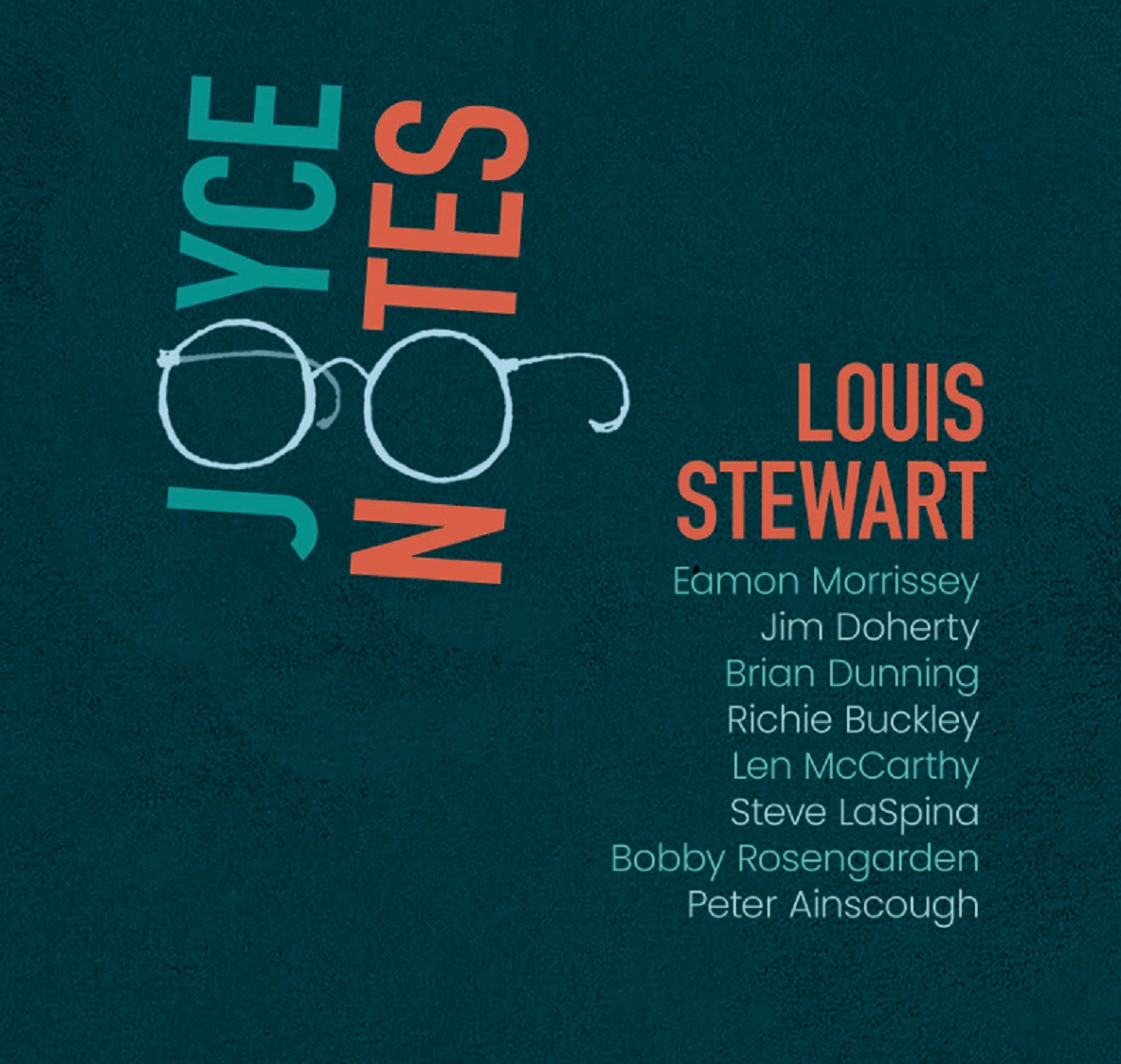
Livia Records continues its remarkable archival journey through the recorded legacy of Louis Stewart with the release of Joyce Notes, a previously unreleased live recording captured at the Cork Jazz Festival on 23rd October 1982
Set for release on 27th March 2026 (CD and digital download), Joyce Notes documents Stewart’s ambitious six-part suite inspired by scenes and characters from James Joyce’s Ulysses. Conceived to coincide with the centenary of Joyce’s birth in 1982, the project emerged from a shared enthusiasm for Joyce between Stewart and Livia Records founder Gerald Davis.
While Stewart is rightly celebrated as one of the great jazz guitarists of his generation, he is less frequently discussed as a large-scale composer. Joyce Notes reveals an artist thinking beyond the standard repertoire format, merging jazz composition with modernist literature in a work that is both structurally ambitious and emotionally expansive
A Unique Irish-American Octet
The performance features an Irish-American octet of exceptional depth:
- Louis Stewart – guitar
- Eamonn Morrissey – voice (readings from Joyce)
- Jim Doherty – piano
- Brian Dunning – flute
- Richie Buckley – tenor saxophone
- Len McCarthy – alto saxophone
- Steve LaSpina – bass
- Bobby Rosengarden – drums
- Peter Ainscough – percussion
Actor Eamonn Morrissey’s readings bring Joyce’s text directly into the musical fabric, deepening the dialogue between word and sound. The suite unfolds across six movements:
- Bronze by Gold
- Gerty McDowell
- Nighttown
- Stephen
- W.B. Murphy
- Molly
Each movement draws on a character or episode from Ulysses, translating Joyce’s psychological depth and shifting perspectives into musical form. The titles themselves reflect key figures and motifs from the novel, from the sensory resonance of “Bronze by Gold” to the hallucinatory drama of “Nighttown” and the life-affirming presence of “Molly”
A Rare Performance, Preserved
Following its Cork premiere, Joyce Notes was performed only twice more in the 1990s — once in Oslo (with Norwegian text) and once in Dublin. That scarcity makes this release especially significant: it captures a major compositional statement that, until now, has existed largely in memory.
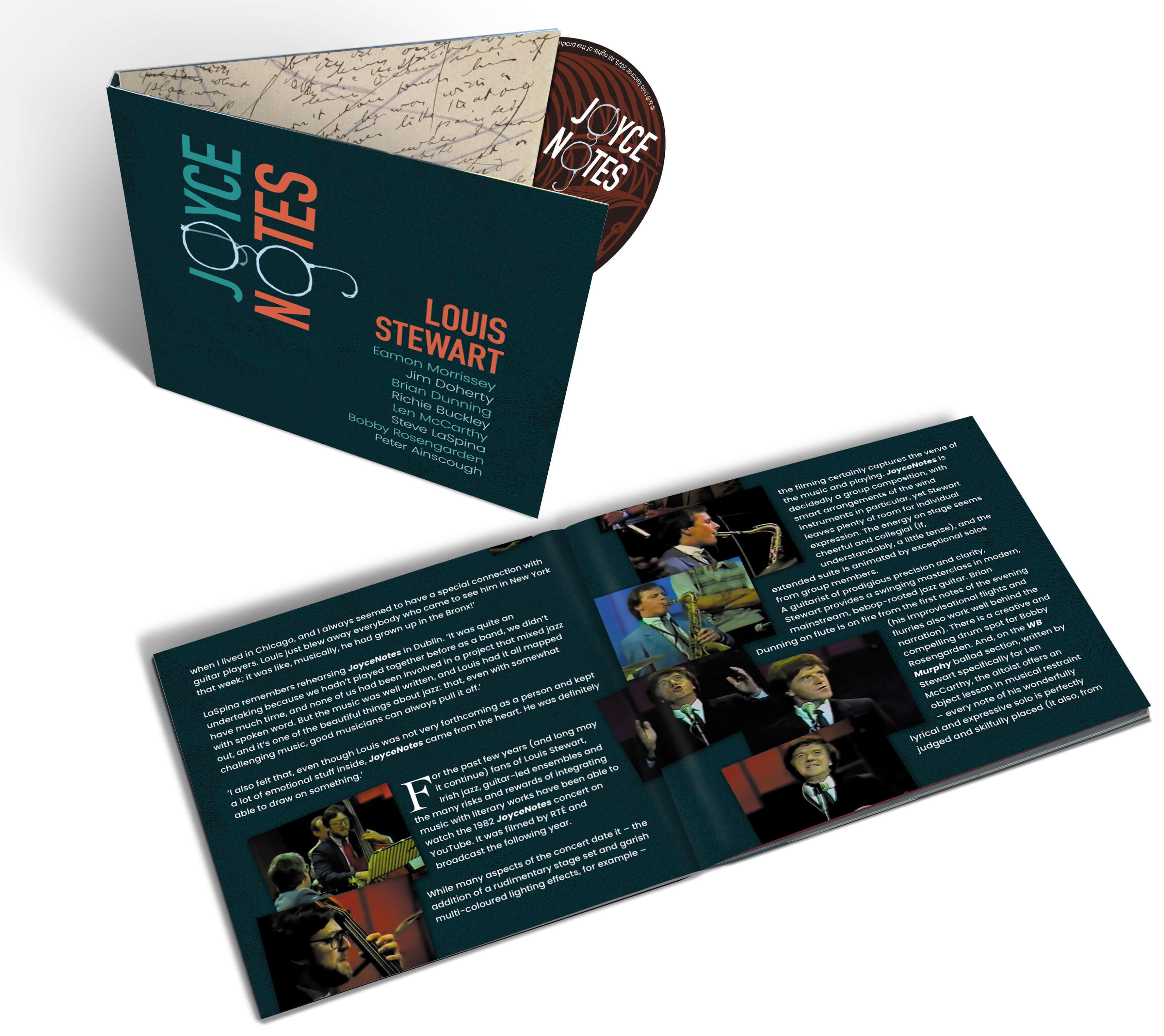
The recording, made by RTÉ Television and now mastered for the first time by Séan Mac Erlaine, presents the suite with clarity and presence. The release is accompanied by a substantial 16-page booklet featuring detailed sleeve notes by journalist Philip Watson and rare performance photographs.
Stewart, Joyce and Livia
The connection between Louis Stewart and Livia Records has always been foundational. Gerald Davis established the label in 1977 specifically to record Stewart and his contemporaries, beginning with the landmark Out On His Own and continuing through duo, quartet and larger ensemble recordings.
Joyce Notes sits comfortably within that lineage while also standing apart. It is neither a straight-ahead small group date nor a conventional studio session. Instead, it documents Stewart engaging with Ireland’s literary modernism on its own terms — an Irish jazz composer interpreting Ireland’s most radical novelist.
In recent years, under the stewardship of Dermot Rogers, Livia Records has continued its thoughtful reissue programme, restoring key recordings while expanding the catalogue. The release of Joyce Notes adds another vital chapter to that story — not simply as an archival curiosity, but as a reminder of Stewart’s breadth as an artist.
A Composer in Full Voice
Though history most often celebrates Stewart for his extraordinary touch, harmonic fluency and rhythmic authority as a guitarist, Joyce Notes invites us to hear him differently: as a composer willing to tackle literary modernism through jazz form, orchestration and ensemble colour.
More than four decades after its premiere, this recording reveals an artist unafraid of scale, narrative and cultural dialogue. It is a rare and important document — one that expands our understanding of Louis Stewart and enriches the ongoing story of Irish jazz.
